Not Everything Needs AI: Why Construction Often Wins with Simple Automation

Not Everything Needs AI: Why Construction Often Wins with Simple Automation
Artificial Intelligence is rapidly reshaping conversations across the construction industry. From predictive scheduling to computer vision on job sites, AI is often positioned as the solution to delays, cost overruns, and inefficiencies.
But there’s a reality many construction leaders are starting to recognize:
Not every construction problem needs AI.
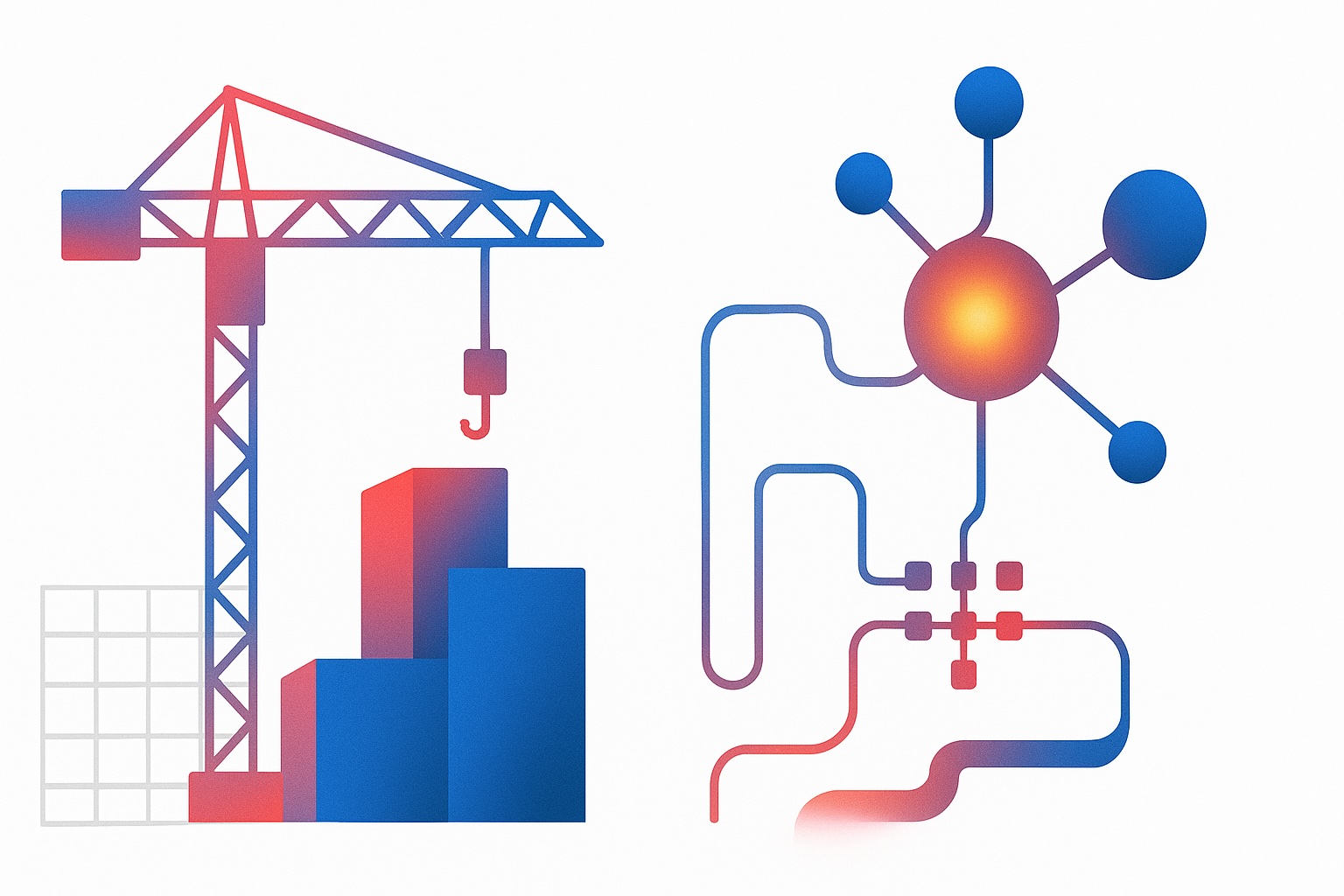
In fact, many of the most common operational challenges in construction can be solved faster, more reliably, and at a lower cost with simple automation and clean data, rather than advanced machine learning models.
The AI Hype vs. the Construction Reality
Construction is a practical, execution-driven industry. Projects are constrained by labor, materials, weather, regulations, and timelines. While AI can deliver value in specific scenarios, most construction firms struggle with more foundational issues:
- Data scattered across spreadsheets, PDFs, and email threads
- Manual re-entry of the same information across systems
- Inconsistent reporting from project to project
- Delayed visibility into costs, schedules, and change orders
Layering AI on top of these problems doesn’t create clarity—it often magnifies inefficiency.
Automation vs. AI: Understanding the Difference
Before investing in AI initiatives, it’s important to distinguish between automation and artificial intelligence.
Automation
Automation is rule-based and predictable. It follows clear logic such as:
- “When X happens, do Y”
- Scheduled jobs, triggers, validations, and system integrations
Common construction examples include:
- Automatically syncing invoices into project cost reports
- Flagging missing permits or submittals before a phase begins
- Generating weekly project status reports without manual effort
Artificial Intelligence
AI is probabilistic and data-driven. It excels at:
- Prediction and forecasting
- Pattern recognition
- Natural language understanding
- Image and video analysis
Examples include:
- Predicting schedule delays based on historical data
- Analyzing job site imagery for safety risks
- Forecasting labor or material shortages
AI is powerful—but only when the underlying data is clean, consistent, and trustworthy.
Common Construction Problems That Do Not Need AI
Many construction challenges are often labeled as “AI problems” when they are actually workflow problems.
Project Reporting Delays
If project managers spend hours compiling weekly reports, the issue isn’t intelligence—it’s manual processes.
Automation solution:
- Pull schedule, cost, and change order data automatically
- Standardize reporting templates
- Schedule reports to generate and distribute automatically
Duplicate Data Entry
Estimators, project managers, and accounting teams frequently enter the same data into multiple systems.
Automation solution:
- Integrate estimating, ERP, and project management platforms
- Apply validation rules to catch inconsistencies early
Missing or Late Documentation
RFIs, submittals, permits, and compliance documents often fall through the cracks.
Automation solution:
- Workflow triggers tied to project milestones
- Automated reminders and escalation rules
- Centralized document repositories with required-field enforcement
Inconsistent Cost Tracking
When cost data lives in spreadsheets and emails, leadership lacks real-time visibility.
Automation solution:
- Scheduled ingestion from accounting and project management systems
- Standardized cost codes across projects
- Automated variance alerts when budgets are exceeded
None of these challenges require AI. They require structure, discipline, and automation.
When AI Does Make Sense in Construction
This is not an argument against AI—it’s an argument for using it intentionally.
AI delivers the most value after automation and data maturity are in place. Strong construction use cases include:
- Predictive cost and schedule overruns
- Job site safety analysis using computer vision
- Natural-language search across contracts, RFIs, and specifications
- Resource forecasting across multiple projects and regions
Without reliable data, these initiatives often stall or fail quietly.
A Practical Path Forward
The most successful construction organizations follow a clear progression:
- Standardize processes
- Automate repetitive workflows
- Centralize and govern data
- Introduce AI where it truly adds leverage
This approach reduces risk, accelerates ROI, and ensures AI investments deliver real business value.
Final Thoughts
AI is a powerful tool—but it is not a shortcut.
In construction, boring, reliable automation done well often delivers more value than cutting-edge AI introduced too early.
If you’re feeling pressure to “do something with AI,” start with a simpler question:
What manual work should no longer exist in our business?
If you’d like help answering that question, you can start by completing a short AI Readiness Assessment or generating a free, customized AI Usage Policy for your organization:
Related Articles
Not Everything Needs AI: Why Higher Education Often Wins with Simple Automation
AI is rapidly entering higher education, but not every challenge requires advanced intelligence. Learn why many institutional pain points are better solved with simple automation—and when AI truly adds value.
5 Strategies for Better AI Adoption
Discover five proven strategies to successfully adopt Artificial Intelligence in your organization, from defining business outcomes to preparing for change management.